
Underhertale: The Fan Game That Redefines the Undertale Universe
By Christopher Green
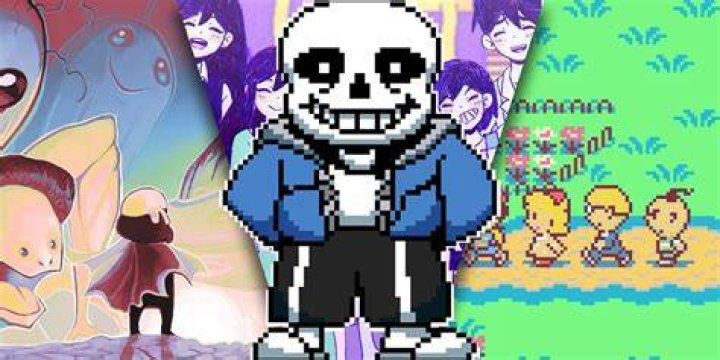
The world of indie gaming has seen few phenomena as impactful as Toby Fox’s Undertale. Its blend of quirky humor, deep emotional resonance, and a revolutionary combat system that let you spare every monster left an indelible mark. But what happens when a dedicated fan takes that foundation and builds something entirely new? You get Underhertale.
This isn’t just another mod. It’s a full-fledged fan game that has been quietly generating buzz within the community. For those who have exhausted every route in the Underground, Underhertale offers a fresh perspective. It’s a love letter, yes, but also a bold reimagining. It asks a simple question: what if the story took a different turn?
What Exactly is Underhertale?
Let’s get one thing straight from the start. Underhertale is not an official sequel. It’s a fan-made project, built from the ground up by a small, passionate team. The core concept revolves around a parallel narrative. You still play as a child who falls into the Underground. But the characters you meet, the challenges you face, and the very nature of the “determination” that drives the story are all twisted into something new.
The game retains the bullet-hell dodging mechanics that made the original so tense. But it introduces new “Soul Modes” that change how you interact with the environment. One moment you might be navigating a puzzle using a cyan soul’s platforming abilities. The next, you’re in a boss fight that requires you to manage a green soul’s shield while dodging a barrage of attacks. It feels familiar, yet completely foreign.
The Lore: A Deeper Dive into the Underground
Where Underhertale truly shines is its writing. The original game was famous for its meta-commentary on choice and consequence. This fan game leans heavily into that, but with a darker, more melancholic tone. The central theme here isn’t just “mercy vs. violence.” It’s about memory, identity, and the cost of rewriting history.
Without spoiling too much, the story introduces a new entity known as “The Echo.” This being exists outside the normal flow of time, observing every reset, every genocide run, every pacifist ending. The Echo is tired. It wants a final, unchangeable timeline. Your actions in Underhertale are not just about saving or killing monsters. They are about convincing this cosmic observer that your world deserves to exist.
This premise allows the game to explore characters from the original in new ways. Sans, for instance, is still a skeleton with a lazy grin. But here, he seems to remember things he shouldn’t. He drops hints about other timelines, other players. It’s a chilling experience for anyone who knows the weight of his character in the original game.
New Characters and Familiar Faces
Underhertale doesn’t just recycle the old cast. It introduces several new characters that feel right at home in the universe.
- Chara (The Guide): In this version, Chara is not a silent narrator or a malevolent spirit. They are a tangible, talkative guide who appears early on. They claim to want to help you escape, but their motives are unclear. Their dialogue changes based on your actions, and they have a habit of breaking the fourth wall.
- Mettaton EX (The Producer): Mettaton is back, but his show has a new format. Instead of a quiz show, he hosts a reality TV-style survival challenge. The stakes are higher, and his ratings depend on your suffering. It’s a brilliant satire of modern media.
- The Collector: A brand new boss who guards the entrance to the final area. The Collector is a massive, amorphous creature made of discarded items and forgotten memories. It represents everything that has been left behind in previous resets. The fight is a visual spectacle, with attacks that pull from the game’s own history.
The writing for these characters is sharp. It captures the original game’s humor but isn’t afraid to get serious. One moment you’re laughing at a bad pun from a new shopkeeper. The next, you’re reading a diary entry that explains why a certain monster is so afraid of humans.
Gameplay Innovations: More Than Just a Reskin
Let’s talk mechanics. Underhertale introduces a system called “Soul Resonance.” Throughout the game, you find fragments of other souls. Each fragment grants you a passive ability. For example, a fragment of a “Patience” soul might slow down enemy attacks. A “Bravery” fragment might increase your invincibility frames after being hit.
You can equip up to three fragments at a time. This creates a build-crafting element that was absent from the original. Do you want to be a tanky fighter who can take hits? Or a glass cannon who dodges everything? The choice is yours. It adds a layer of strategy to every encounter.
The puzzles are also more complex. They often require you to switch between your equipped soul fragments mid-room. One puzzle might require you to use a “Justice” fragment to shoot switches, then quickly switch to a “Kindness” fragment to create a bridge. It’s challenging but never feels unfair.
The Visual and Audio Identity
Underhertale uses a pixel art style that is clearly inspired by the original, but with its own distinct flair. The color palette is more muted, with a lot of deep blues and purples. This gives the world a somber, almost dreamlike quality. The character sprites are more detailed, with subtle animations that bring them to life.
The soundtrack is a standout feature. It’s composed by a team of musicians who clearly understand the original’s leitmotifs. They weave familiar melodies into new compositions. The main theme, “Echoes of a Fallen Child,” starts with a few notes from “Once Upon a Time” before twisting into a haunting, minor-key waltz. It sets the tone perfectly.
Sound design is also top-notch. The “whoosh” of a bullet passing by your heart, the crackle of a save point, the heavy silence before a boss fight—all of it is meticulously crafted. It pulls you into the world and keeps you on edge.
Community Reception and Development Status
The Underhertale community is small but incredibly dedicated. Forums are filled with theories about the lore, fan art of the new characters, and discussions about the best soul fragment builds. The developers are active, regularly posting updates and listening to feedback.
As of now, the game is in a late beta stage. A full demo covering the first two chapters is available for free. The developers have stated that the full game will be released in chapters, similar to how Deltarune was released. This allows them to polish each section and incorporate player feedback.
There is, of course, the ever-present question of copyright. Toby Fox has historically been very lenient with fan projects, as long as they are non-commercial. Underhertale is strictly free. The team accepts donations to cover hosting costs, but the game itself will never be sold. This keeps the project in a legal gray area, but one that the community feels is safe.
How to Play Underhertale
Getting started is straightforward. You can find the official download link on the game’s dedicated website or its GameJolt page. The file size is around 200 MB, making it a quick download.
Here’s a quick checklist for new players:
- Back up your original Undertale save files. While Underhertale runs independently, it’s always good practice.
- Read the included README file. It contains important information about controls and known bugs.
- Don’t skip the tutorial. The new Soul Resonance system is explained there, and it’s crucial for later puzzles.
- Talk to everyone. Like the original, Underhertale rewards exploration. NPCs have a lot to say, and their dialogue changes as you progress.
The game runs on a modified version of the GameMaker Studio engine. It should work on most Windows, Mac, and Linux systems. Controller support is included, but keyboard controls are well-mapped.
Why Underhertale Matters
In an era where AAA games often feel safe and formulaic, fan projects like Underhertale remind us why we love games in the first place. They are labors of love, created by people who care deeply about the source material. They take risks. They experiment. They tell stories that the original creators might never have thought of.
Underhertale is not just a tribute. It’s a conversation with the original game. It asks hard questions about the nature of choice, the burden of memory, and the ethics of a world that can be reset at will. It respects the source material while forging its own path.
For fans of Undertale who are hungry for more, this is a must-play. It captures the same magic—the same blend of humor, heart, and horror—that made the original so special. It’s a reminder that the Underground is a place with infinite stories to tell. And sometimes, the best stories come from the fans themselves.
So, if you’re ready to fall back into a world of monsters, magic, and moral dilemmas, give Underhertale a try. Just remember: in this version, the Echo is always listening. And it remembers everything.
Related Archive
More in gaming
